
CERC — Environmental Software and Services

Forecasting the air quality in the West Midlands, UK
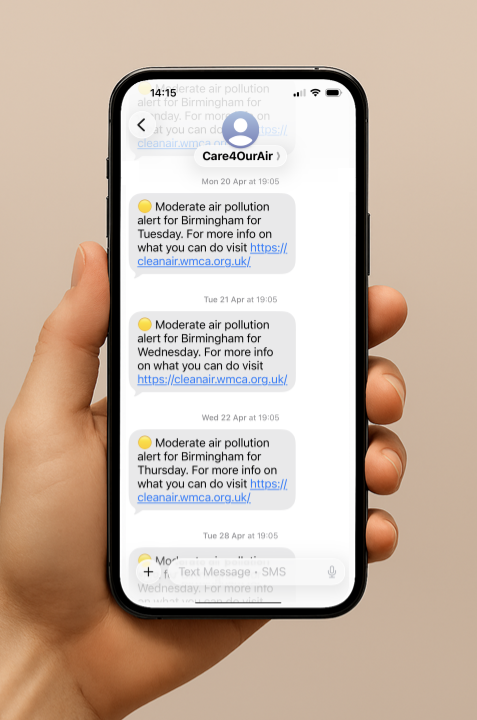
The West Midlands Combined Authority (WMCA) commissioned CERC to develop and support an air quality forecasting system for the West Midlands, to generate high-resolution, 3-day air quality forecasts and alerts for the region's seven local authorities. The system delivers geo-referenced 5-metre resolution forecast maps for nitrogen dioxide (NO2), ozone (O3), and particulate matter (PM2.5 and PM10) and alerts via text, email, and voicemail. Alerts are triggered when pollution levels reach moderate or higher on the UK Government’s Daily Air Quality Index (DAQI). The system is fully integrated into the WMCA's air quality data platform, which also shows current air pollution levels across WMCA's network of air quality sensors.
An innovative feature of this system is that the alert messages are tailored to personal activities. For example, people with wood burning stoves that are not their main heating source are encouraged to minimise their use when a pollution alert is in effect, to reduce their own pollution exposure as well as their neighbours'. Alert messages also include practical tips to help people minimise their exposure to poor quality air, for example by seeking out areas with lower pollution when exercising outdoors.
The project to develop this system built on CERC's longstanding collaboration with the University of Birmingham through initiatives such as WM-Air, WM-NZ, and WM-Adapt. These projects demonstrate how high-resolution air quality and temperature modelling can inform regional policy, leading to health and environmental benefits over the West Midlands region.